By Dr. Scott P. Sells, Ph.D. | Author, Parenting Your Out-of-Control Teenager
“No! I’m not doing what you tell me!”
“Take out the trash yourself!”
“I don’t respect you!”
Sound familiar? When your teenager talks this way, it’s natural to get louder, threaten consequences, or launch into a lecture.
If you’re wondering how to deal with a disrespectful teenager, start here: keep your response brief, state the boundary calmly, and return to the problem when you can both talk without escalating. Then follow through. Taking a break does not mean dropping the expectation.
Here’s what I’ve learned in more than 30 years of helping families facing extreme teen behavior: You cannot discipline your way out of disrespect with consequences alone.
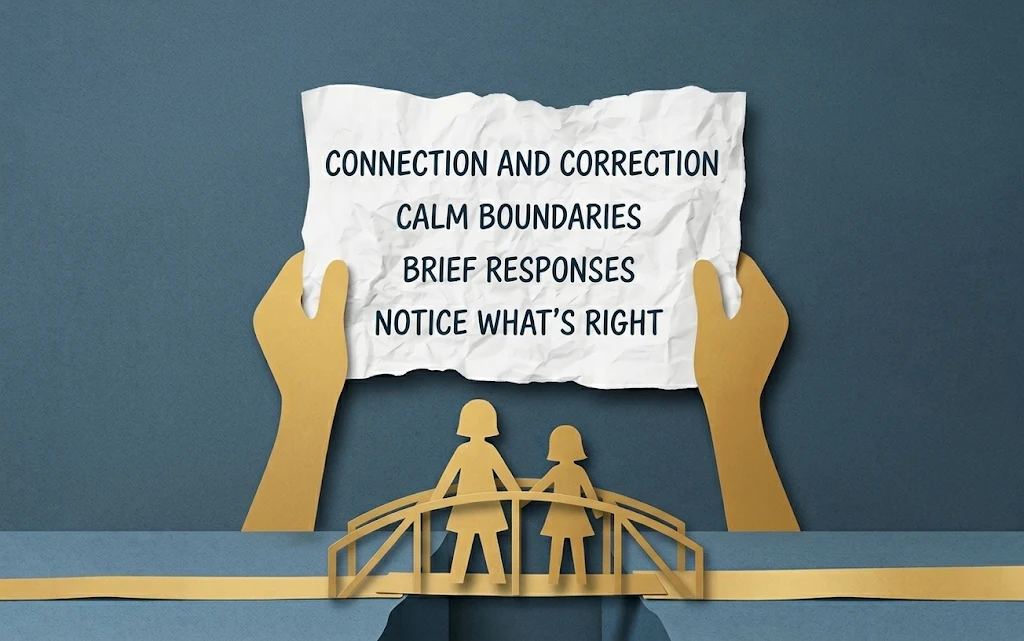
You need connection AND correction. Sometimes the best way to stop the next argument is to change what happens before it begins.
Why Disrespect Keeps Getting Worse
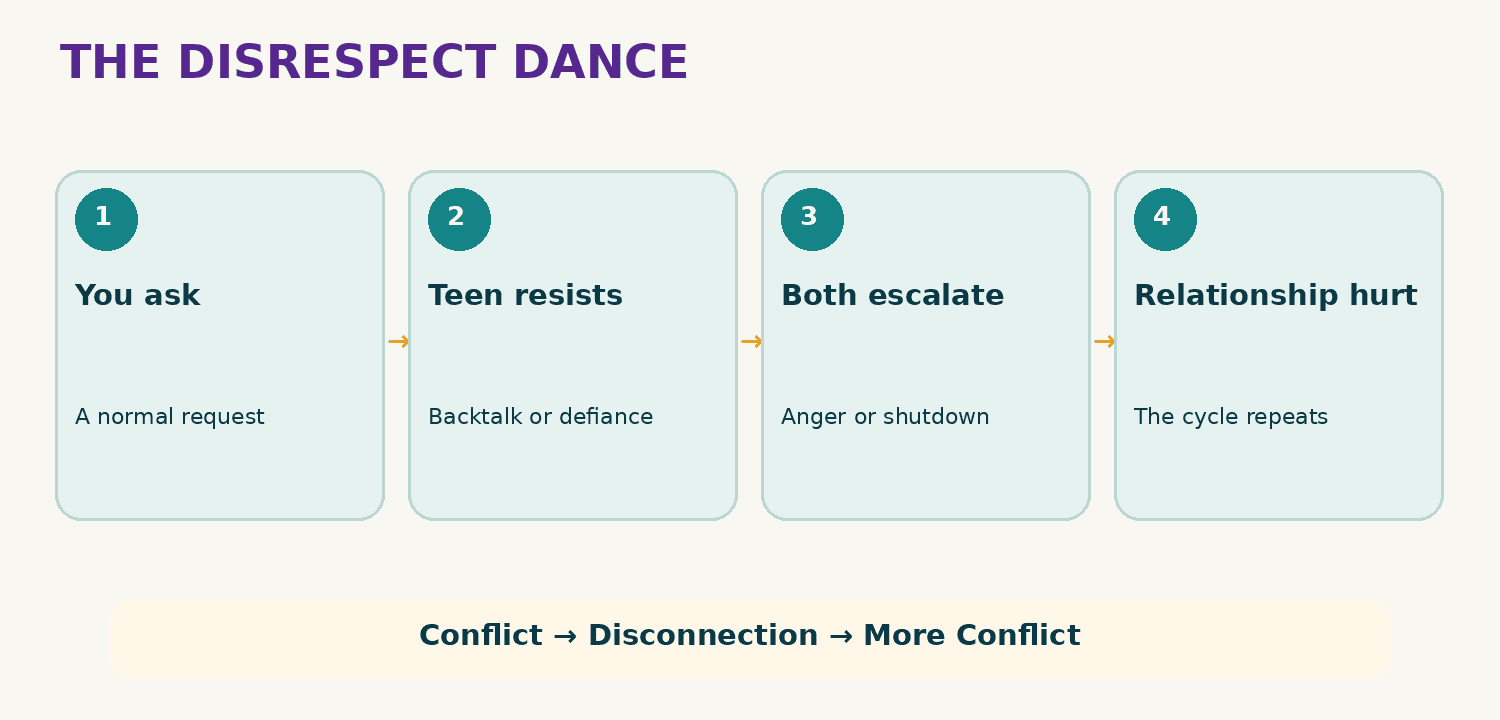
I call it the Disrespect Dance. You make a request. Your teenager resists. You escalate. Your teen escalates. You threaten consequences. Nothing changes—and the relationship takes another hit.
Repeat that dance often enough, and something heartbreaking happens. Parents tell me, “Scott, I love my teenager, but I don’t even like being around them anymore.” The original behavior problem has become a relationship problem, too.
The goal is to change your part in that dance while keeping a clear boundary.
Three Things to Say Instead of Yelling
1. When Your Teen Talks Back
Instead of: “Don’t you dare talk to me like that!”
Try: “I want to hear what you’re saying. But let’s talk when we can both be respectful.”
Keep it brief. You don’t need to answer every insult or convince your teen that you’re right in the middle of the argument.
2. When Your Teen Refuses a Request
Instead of: “You’ll do it NOW, or else!”
Try: “The expectation hasn’t changed. We can talk about it when we’re calmer.”
Then follow through with your established plan. If you haven’t made a clear plan yet, discuss it once everyone is calm rather than announcing a bigger punishment in the heat of the moment.
3. When Your Teen Says Something Hurtful
Instead of: “After everything I’ve done for you!”
Try: “That was hurtful. I’m going to give us some space. We’ll come back to this.”
These aren’t magic words. They help you avoid feeding the conflict while preserving boundaries. Your teen may still be upset. You can keep your own response calm without requiring an immediate apology.
What to Do Once Everyone Is Calm
Come back to the issue. Otherwise, “We’ll talk later” can turn into never talking about it at all.
Name the behavior without labeling your teen. “You called me a name when I asked about the trash” is more specific than “You’re always so disrespectful.”
Listen to what your teen was trying to say. Then explain the expectation for next time. For example:
“You can tell me you’re frustrated. You can ask whether the chore can wait until you finish something. Calling me names isn’t okay. The trash still needs to go out.”
If an agreed consequence applies, follow through calmly. If you yelled, own your part too: “I raised my voice. That wasn’t helpful, and I’m sorry.” You can apologize for yelling and still keep the rule.
Rules WITH a Relationship
Do you still need rules and consequences? Absolutely. Keep clear expectations and appropriate follow-through. Stronger connection may improve the chance of cooperation—not guarantee it. That’s the difference between consequences alone and love with limits.
Start by noticing something your teenager does right. Be specific:
“I noticed you helped your sister today. Thank you.”
Let that stand on its own. Adding “Why can’t you always be like that?” turns a moment of connection into another criticism.
Frequently Asked Questions
Is Disagreement the Same as Disrespect?
No. Teens need room to disagree. “I think that rule is unfair” is different from an insult or a threat. You can hear your teen’s opinion while keeping the boundary.
Should I Ignore Teen Backtalk?
No. Address it briefly and calmly. If the conversation keeps escalating, pause and return to it later. You don’t have to engage in every exchange to make the expectation clear.
How Quickly Will a Calmer Approach Work?
There’s no guaranteed timetable. Focus on consistent boundaries and genuine connection. Look for small changes, such as a shorter argument or a willingness to return to the conversation, rather than expecting instant cooperation.
When Your Family Needs More Support
If conflict is persistent, includes aggression, or disrupts daily family life, seek individualized help from a qualified mental health professional. If anyone is in immediate danger, put safety first and contact local emergency services.
For more on when to seek support, see the Royal Children’s Hospital’s guide to teen behavior.
One Thing to Try Tonight
Notice one positive behavior today. Write it down. Share it without asking for anything back. Sometimes the first step toward less disrespect is remembering there’s still something good between you.
Connection Before Correction.
For a place to start, visit Free Tools and look for “Notice What’s Right.”