By Dr. Scott P. Sells, Ph.D. | Author, Parenting Your Out-of-Control Teenager
You’ve grounded your teenager. Taken away the phone. Canceled privileges. And your teen looks you in the eye and says: “I DON’T CARE!”
When consequences don’t work, our instinct is often to make them bigger. But a bigger consequence isn’t necessarily a better one.
Start by checking four things: Is the expectation clear? Does the consequence connect to the behavior? Can you follow through? Does your teen know how to earn the privilege back?
You may need a different tool. Here are four things to reconsider.
1. Stop Making Consequences Bigger
Imagine your teen repeatedly misses curfew. You announce, “You’re grounded for three months!” A few days later, the punishment is almost impossible to maintain, and the bargaining starts.
Try instead: “Our agreement is that you’re home by 10 p.m. If that doesn’t happen, we’ll pause the next optional outing and review the plan.”
Choose consequences that are clear, reasonable, connected to the behavior, realistic to enforce, and explained before the next conflict.
Your teen should know what the rule means in practice. “Be more responsible” leaves room for confusion. “Be home by 10 p.m.” gives both of you something specific to work with.
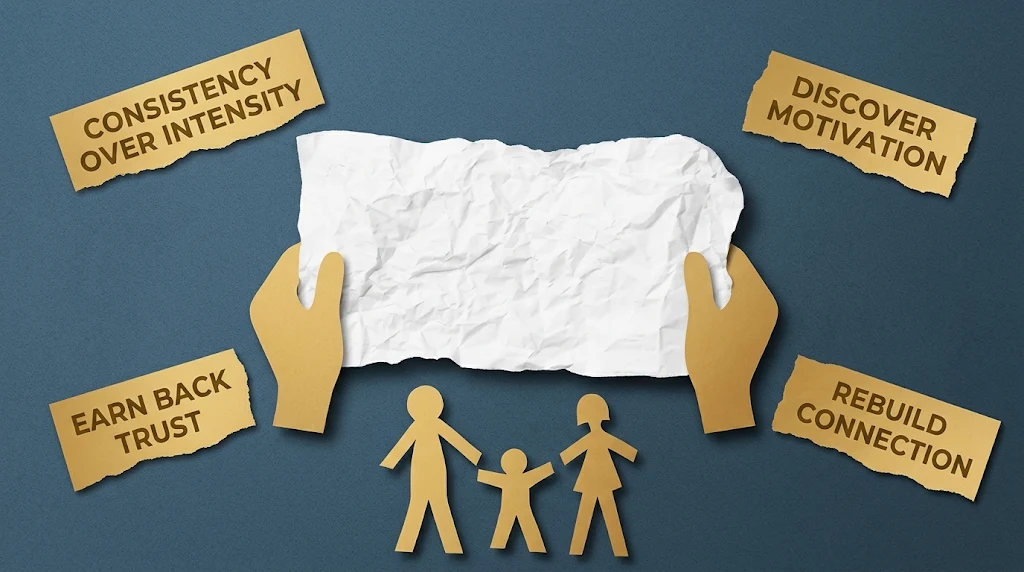
Consistency beats intensity.
2. Discover What Actually Motivates Your Teen
Ask: What matters to my teenager right now? Friends? Independence? Activities? Regaining a privilege?
In Parenting Your Out-of-Control Teenager, I teach parents to identify their teen’s particular motivations rather than assume the same consequence works for everyone. This isn’t about finding something precious to threaten. It’s about linking responsible choices to opportunities for growing independence.
Have the conversation when things are calm. You might ask:
“What is one thing you’d like more freedom to do? Let’s talk about what you would need to show us to handle that responsibility.”
Listen to the answer. A privilege that matters to you may not matter much to your teen.
3. Give Your Teen a Way to Earn Trust Back
“You’re grounded until I decide you’ve changed!” leaves no clear finish line. How can your teenager demonstrate progress?
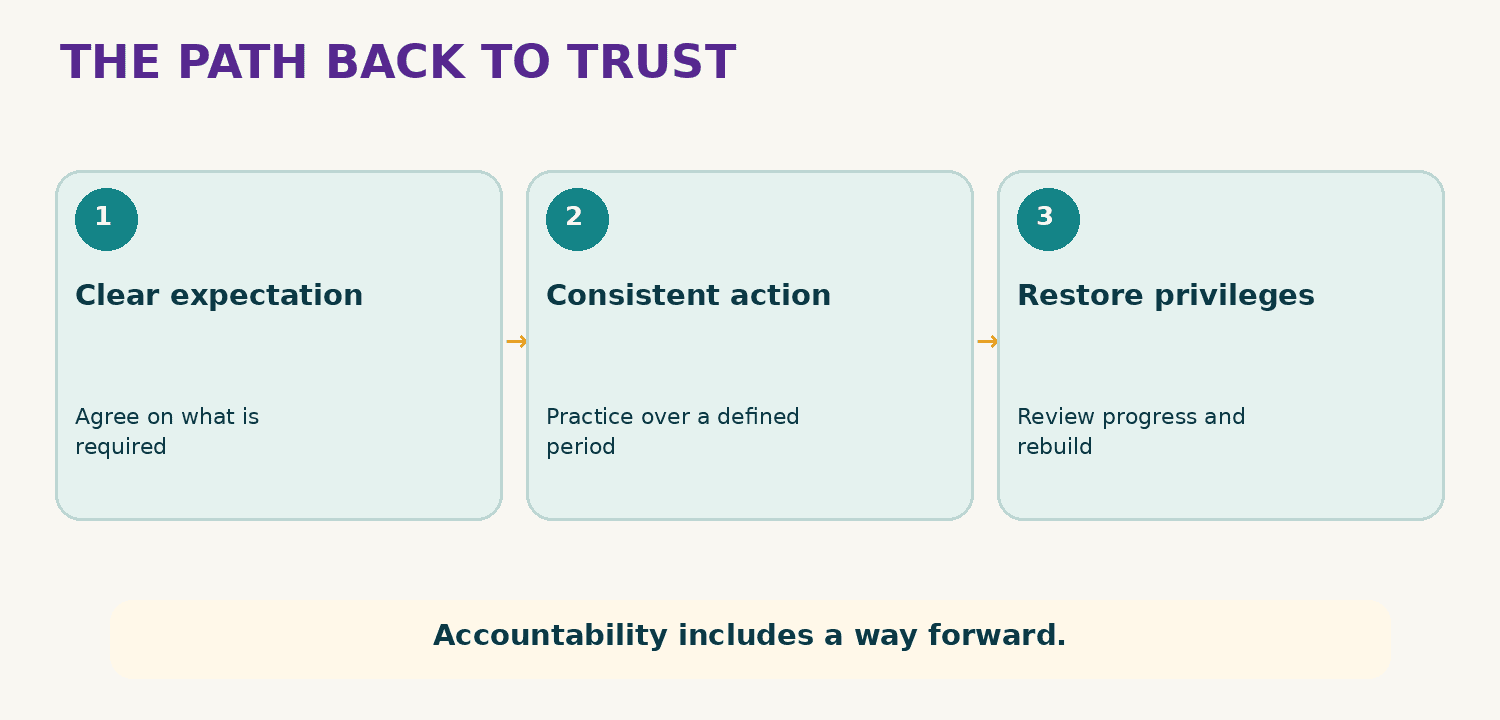
Spell out what needs to happen, when you’ll review it, and what privilege can return. Avoid changing the requirements halfway through.
A Curfew Example: From a Broken Rule to a Clear Plan
Here is an example to adapt to your teen’s age and your family’s situation. It illustrates a plan, not a promise of results.
Expectation: Be home by 10 p.m. If a ride falls through or there’s an unexpected delay, call before curfew so we can make a safe plan.
Consequence: If you miss curfew without an agreed change, the next optional evening outing is paused. We’ll discuss what happened when we’re calm.
Path back: After that pause, the next two optional evening outings will have a 9 p.m. curfew and an agreed ride home. If you meet those expectations, the 10 p.m. curfew returns. We’ll review the plan together the following day.
Your family may need different times or a different arrangement. The point is to make the next step understandable and achievable. A genuine emergency or a delay beyond your teen’s control needs to be considered, too.
Now there’s a clear expectation and a path forward. Accountability should include a pathway back to trust.
4. Rebuild Connection Before the Next Argument
After months of defiance, parents naturally focus on mistakes. But what about the positives?
“I noticed you came home when we agreed today. Thank you. That meant a lot to me.”
No strings attached. No reminder of everything that went wrong last week.
You’re not removing consequences or overlooking serious problems. You’re rebuilding the relationship alongside the rules. Rules WITH a relationship can create better opportunities for cooperation—not perfect cooperation.
Frequently Asked Questions
What If My Teenager Says They Don’t Care About Consequences?
Don’t automatically increase the punishment. Revisit the plan when you’re both calm. Ask what matters to your teen, check whether the expectation is realistic, and make the path back to privileges clear. “I don’t care” does not give you enough information to decide that a harsher consequence is the answer.
What Consequences Work Best for Teenagers?
There is no single consequence that works for every teen. Start with something proportionate to the behavior, practical to enforce, and limited enough that your teen can see a way forward. Explain the plan ahead of time and connect it to the responsibility involved.
What If My Teen Still Refuses to Follow the Plan?
Ask what is getting in the way. Does your teen understand the expectation? Can they carry it out? Do they need help solving a practical problem, such as arranging a ride? Persistent severe defiance, aggression, or safety concerns may need individualized professional support. If anyone is in immediate danger, put safety first and contact local emergency services.
For another professional perspective on proportionate consequences and rebuilding trust, see the Child Mind Institute’s guide to parenting a defiant teen.
One Thing to Try Tonight
Think of your teen’s most common rule violation. Ask: “Does my teen know exactly what I expect—and how to rebuild trust when they get it right?”
If the answer is no, write down one clear expectation, one reasonable consequence, and one way to earn the privilege back. Discuss it when you’re both calm.
Extreme problems require specialized tools—not simply bigger punishments.
For help thinking about what matters to your teen, visit Free Tools and look for “Find Motivation.”